How a three-card reading works
The free tarot reading on AstralHoro is three cards you turn yourself. The deck is Rider–Waite–Smith, 1909. Faces and reversals lock before you touch a card. Past is what led here. Present is where it stands. Future is where it heads if nothing else changes. The three pictures, and one line that closes on the last card, are the reading. There is no generated essay after them.
Today’s card sits on the table without a draw. It changes with the date. It is not your three-card spread, and it is not a yes or no. Draw when you have a question small enough for three seats.
Spreads on this site
Three cards is the default table: past, present, future. Yes or no is a three-card tally — against, the weight, and for — and the answer is yes, no, or not yet. Love tarot names you, them, and the bond. Money tarot names what you have, the block, and the next move. Celtic cross is ten cards and one question: heart, what crosses it, and the outcome.
The three-card draw, yes or no, love, and money stay free. The Celtic cross uses credits. Card meanings for all seventy-eight pictures live under the deck. Start from this table. Open the other doors when the question changes shape.
Rider–Waite on this table
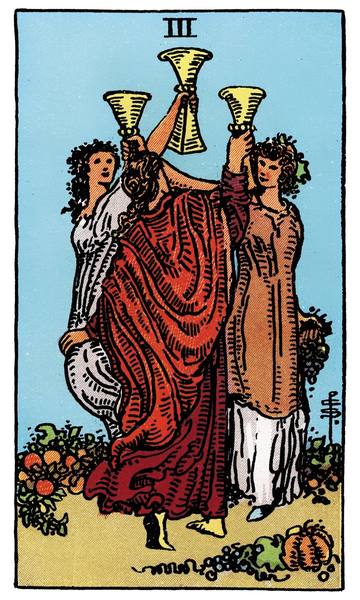
The pictures are Rider–Waite–Smith, 1909. Upright and reversed both appear. A reversed card is the same picture turned, not a different deck. The meaning on the card is the short line for that orientation. The longer page for each picture is under card meanings.
You pick the cards. Faces lock before you touch one. There is no live reader and no second generated essay. AstralHoro is the table. The seventy-eight pages stay free to read even if you never draw.
How to ask
Ask one question the three seats can hold. “What is the real state of this work?” is a question. “Tell me everything about my future” is not. Name the situation. Do not name the answer you want. If the question is strictly yes or no, open that spread instead of forcing a past-present-future to vote.
You can leave the question blank. The cards still land in order. A sentence is useful later, when the library still has the three pictures and you have forgotten why you drew.
When to use the Celtic cross
Use three cards for a small question: a week, a conversation, a choice that already has a shape. Use the Celtic cross when the situation has a history, a public face, other people, a hope, a fear, and an outcome you need named in order. Ten seats. Heart in the middle. Outcome at the end of the staff.
The cross is not a louder three-card draw. It is a different tool, and it is the one that costs credits. If you only need a yes or no, do not pay for ten cards to avoid saying the question plainly.
Card meanings
The Fool · The Lovers · Death · The Star · The Moon
Tarot reading questions
Is this a free tarot reading?
Yes. The card of the day and a three-card draw are free. Yes or no, love, and money are free. The Celtic cross is six credits. There is no signup to draw three cards.
How does a three-card tarot reading work?
You lay the deck face down and pick three. Past, present, future. Reversed means the picture is turned. The reading is the three pictures and a closing line from the last card.
Do I pick the cards myself?
Yes. The cards stay face down until you choose them. The result is not a button that prints three names.
What deck is this?
Rider–Waite–Smith, 1909. Upright and reversed both appear. Each card has its own meaning page.
When should I use a Celtic cross?
When the question is a situation, not a single move. Ten seats, one question. It is not included in the free three-card table.
Is there a live reader?
No. AstralHoro is the table. There is no person on the other end of the draw.
Where are the card meanings?
Every card has a page under /cards. The Fool, The Lovers, Death, The Star, and The Moon are a place to start. The index lists all seventy-eight.
How does a free tarot reading work?
You turn three cards yourself from a face-down Rider–Waite deck. The draw is free, and there is no signup.